For the first 18 years of post-monarchy Nepal, the country had 14 prime ministers – leaders changing almost every year, with several taking office, being forced out, and then returning a few years later.
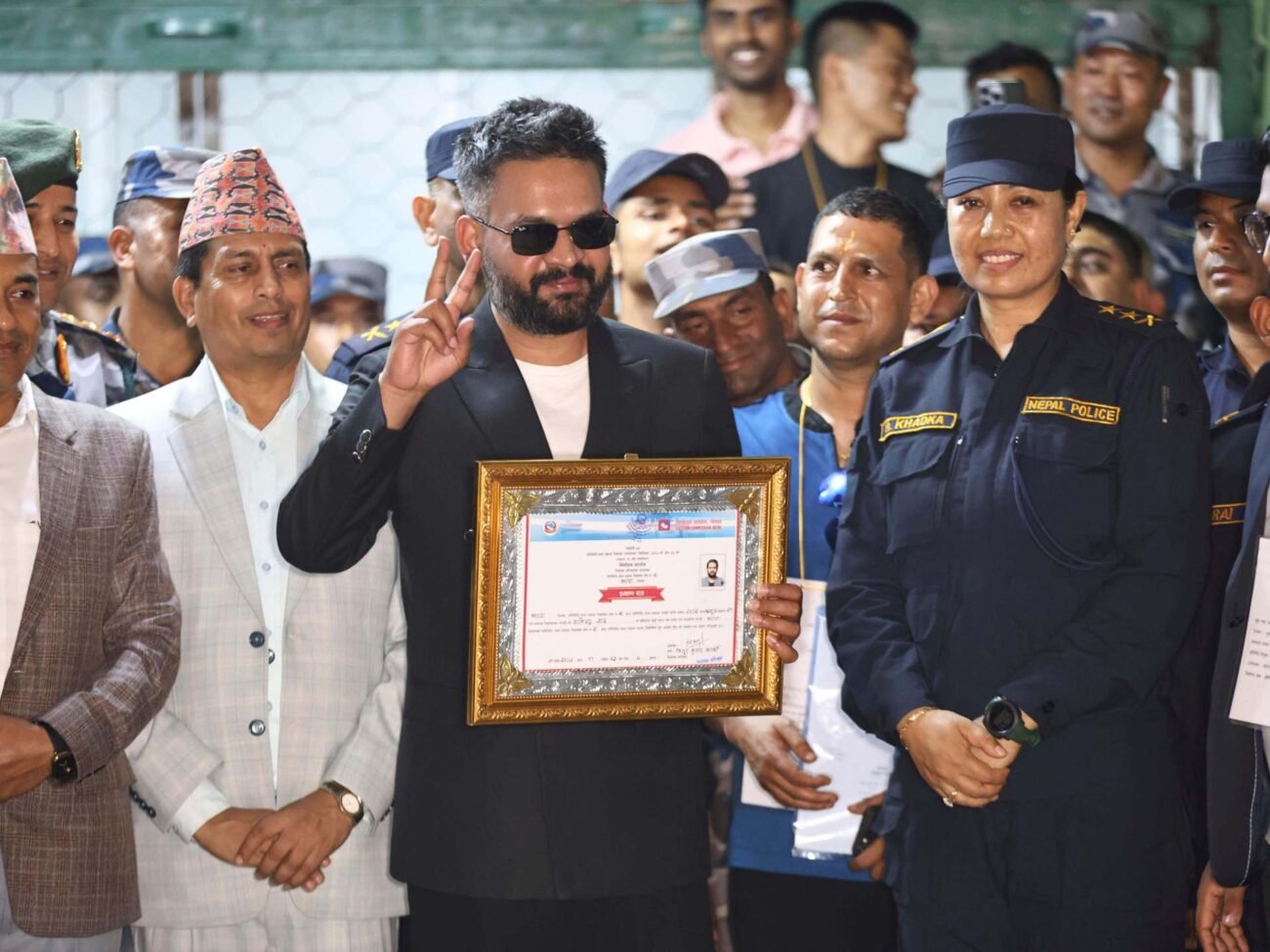
On March 5, 2026, Nepal appeared to draw a line in the sand. Months after a Gen Z-led uprising ousted the then-prime minister, KP Sharma Oli, millions of voters chose rapper-turned politician Balendra Shah – or Balen as he is widely known – and his Rastriya Swatantra Party (RSP) to lead the nation. On Friday, March 27, Shah was sworn in as Nepal’s prime minister.
The RSP is barely four years old, and Shah’s only prior political experience is as mayor of the capital, Kathmandu.
Now, with a landslide win, analysts and voters say Shah and the RSP have a historic opportunity to build on the popular 2025 revolt and deliver on the aspirations of young Nepalis. But with that opportunity comes risks, they add.
“There is so much excitement with the heavy mandate. This is a historical and unprecedented opportunity for him to execute his agenda because his party is likely to have close to a two-thirds majority,” political analyst Bishnu Sapkota told Al Jazeera. But, he added, “ expectations are enormous. I do not think it is realistic for him to fully meet them.”
Too big a mandate?
In the election, Shah defeated Oli in a constituency that had been the former prime minister’s stronghold for decades. The RSP won 125 of the 165 first-past-the-post seats in parliament. Seats determined through proportional representation – 110 seats are up for grabs – are yet to be divided among parties, but everything points to a two-thirds majority for the RSP.
That’s a larger mandate than even the RSP itself expected.
“We were expecting just over a 50 percent majority, but a two-thirds mandate was beyond our expectations,” RSP leader Shishir Khanal told Al Jazeera. Khanal, who was a lawmaker in the outgoing parliament, was re-elected on March 5.
“The challenge is that such a mandate creates very high expectations among people, who want fast results. Given Nepal’s institutional capacity and almost stagnant economic growth, delivering those results will be extremely difficult.”
One immediate test for Shah will be implementing the findings of the Karki Commission, formed by the interim Sushila Karki government that took charge after Oli’s ouster last year. The commission was tasked with investigating the killings and property damage during the Gen Z movement last year. The panel submitted its report to the government on March 8, 2026. This interim government is expected to hand over the investigation to the incoming Shah government to implement.
“There is a popular demand that the report be made public and implemented quickly,” Sapkota, the analyst, said. “If the interim government hands over the report as promised, implementation will have to happen in stages. As soon as he begins doing that, political reactions will follow, and he will have to manage them carefully.”
The protests last year were driven by public anger over corruption, poor governance and lack of accountability, issues that voters expect the new government to address urgently. High-profile corruption investigations involving politicians are likely to be among the upcoming government’s first major tasks.
That will not be an easy challenge to address.
Shah joined the RSP only weeks before the election, and was nominated as its prime ministerial candidate, while Rabi Lamichhane, the television presenter-turned-politician who founded the party, remains its chairman.
Lamichhane himself remains a controversial figure, facing allegations of fraud, organised crime and money laundering. He has previously served jail sentences and is currently out on bail. Lamichhane is accused of illegally holding two passports, United States and Nepali, which is forbidden under Nepali law.
Two power centres?
The relationship between Shah and Lamichhane, and the balance of power between them, will also come under scrutiny, say experts.
Gehendra Lal Malla, professor of political science at Tribhuvan University in Kathmandu, described their alliance as a “marriage of convenience”.
“Balen needed a party to contest the election, and Rabi needed Balen’s popularity,” he said. “But differences could emerge later.”
Malla said Shah will also face a difficult test in dealing with the ongoing charges against Lamichhane. “We have a culture in Nepal where politicians protect each other,” he said. “Shah must uphold the rule of law and not protect anyone from his own party.”
At the same time, Malla noted that Shah’s popularity was the main factor behind the RSP’s success. “Balen’s appeal was the reason the party gained such a huge mandate,” he said. “He could end up having a stronger grip on the party than its president.”
Analyst Sapkota said the RSP leadership, including Lamichhane, would need to acknowledge that the overwhelming mandate they received was largely because of Shah’s appeal. “They have to recognise that and give Shah absolute freedom to form the cabinet of his choice. Of course, the party can give their inputs and suggestions,” said Sapkota.
Khanal said, based on the conversation and an agreement they had signed, that Shah will lead the government and Lamichhane the party. “From that perspective, they have their individual role sorted out, and both will have to face challenges and manage expectations on their own respective front,” Khanal told Al Jazeera. “I have observed them work very closely together within the last election cycle and campaigning. Their decision-making has also been in collaboration. So, with what I have experienced so far, there wouldn’t be any friction between them.”
The first 100 days
For Sapkota, Shah’s political novelty might work in his favour. “He doesn’t have the baggage of party cadres and internal factions. That gives him more freedom compared to previous prime ministers.”
RSP leaders say the government plans to move quickly. “In the first 100 days, the honeymoon period, people will begin to see changes,” Khanal said.
The party has planned to prioritise anticorruption measures, including investigations into the wealth of senior officials and politicians since 1990. “We want to form a commission to investigate the assets of high-level officials and reopen high-profile corruption cases that were paused,” Khanal said.
These steps respond directly to the demands of last year’s Gen Z protests.
For many young activists who drove the protests, the election result represents hope, but also a new government that must be held accountable.
Gen Z activist Yujan Rajbhandari, 23, said the new government must prioritise good governance and protect civic freedoms, or face pushback from the same movement that enabled its rise. “With the RSP’s large majority, parliamentary opposition will be weak,” he said. “So the streets will play a major role as opposition.”
Beyond immediate reforms, Nepal is in the midst of a debate on whether to introduce broader constitutional reforms, with questions about how decentralised power needs to be.
Khanal said the party plans to establish a committee to review whether amendments may be necessary.
Shah’s critics have also questioned his diplomatic skills, citing past social media posts attacking Nepal’s neighbours, including India and China, and important partners such as the US. As Kathmandu mayor, he briefly banned Indian films and displayed a “Greater Nepal” map that showed Indian territory as part of an aspirational larger Nepal.
Sapkota said those concerns were being overblown.
“When he made those remarks, he was a mayor, not a national leader responsible for foreign policy,” he said. Sapkota argued that Shah’s lack of political baggage could allow Nepal to pursue a more independent diplomacy. “This is a clean slate,” he said. “Previous leaders had historical ties and obligations with different countries. Shah does not have that baggage, which could give Nepal greater independence.”
Neighbouring India has already signalled a willingness to work with Nepal’s new leadership.
Indian Prime Minister Narendra Modi congratulated Shah and Lamichhane after the election and expressed hopes for stronger bilateral relations. Shah responded by emphasising the importance of maintaining the “historical, close and multifaceted relations” between Nepal and India and congratulating India for their recent T20 Cricket World Cup win.
For Malla, another important element to watch would be Shah’s relationship with the media. “Balen should engage more with the press once he becomes prime minister,” he said. “In the past, he has often said he prefers to work more and talk less. But as a national leader, communication and accountability are essential.”
