EXPLAINER
While Trump has talked about diplomacy, fears of a ground invasion in Iran loom as US troops arrive in the region.
Published On 30 Mar 2026
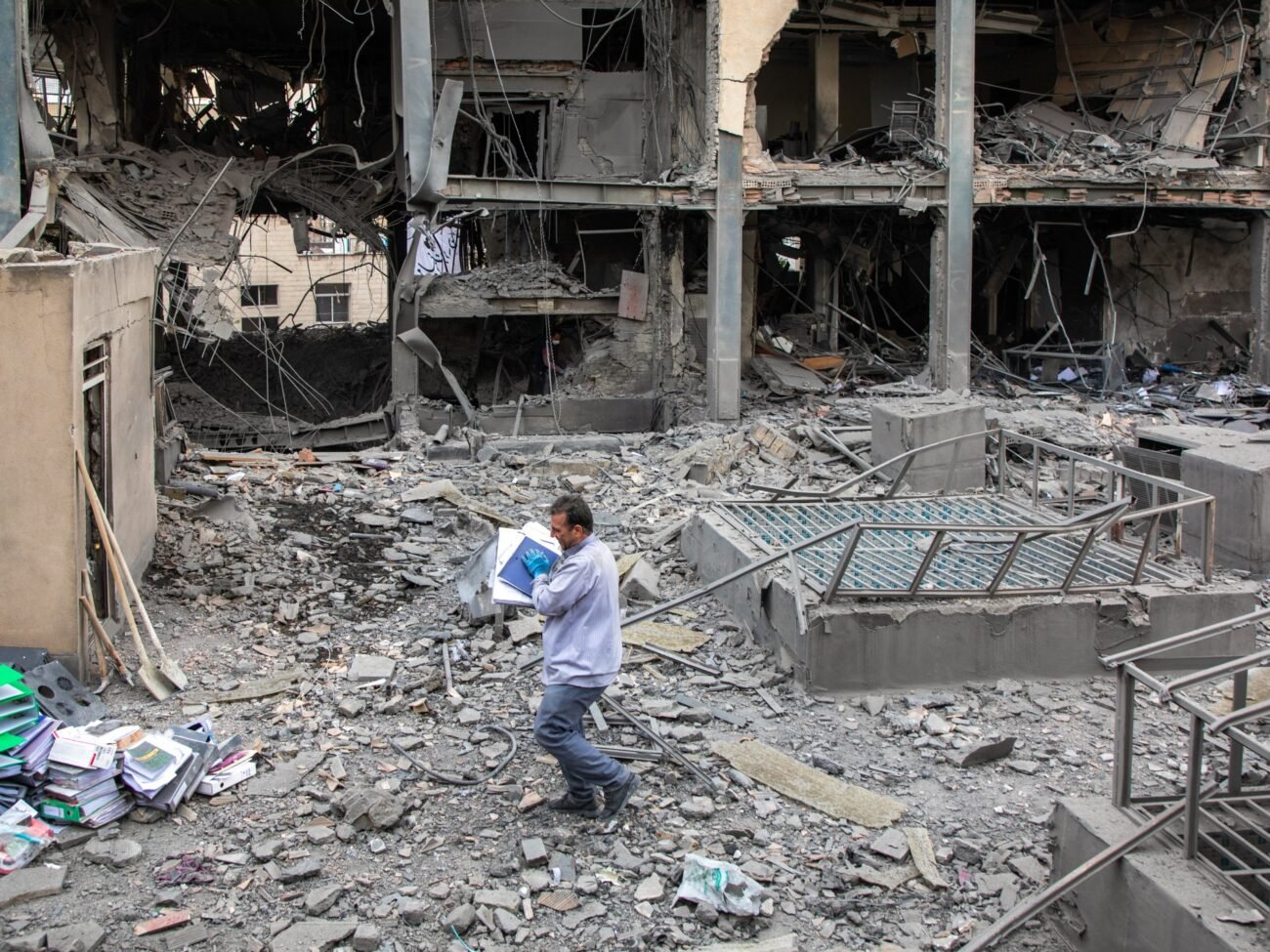
US-Israeli overnight strikes hit Tehran and other cities, with power infrastructure targeted in the Iranian capital, as the conflict causes upheaval in global stock and oil markets.
The attacks caused a blackout, which has since been restored, according to the Iranian authorities.
United States President Donald Trump said in an interview that he wanted to “take the oil in Iran” as Tehran accused Washington of plotting a ground attack despite publicly pushing for a negotiated deal. On Sunday, he said, “We’ll make a deal with them [Iran], I’m pretty sure.”
Trump’s comments came after Pakistan, which hosted talks on Sunday aimed at de-escalating the war, said it was preparing to host “meaningful talks” in the coming days.
Here is more about what is happening on Monday.
In Iran
- Powerful explosions were heard in Tehran. The Fars news agency reported another explosion in the city of Ray, which is part of the metropolitan area of Greater Tehran.
- The Israeli military said on Monday it was “currently attacking the infrastructure” of the Iranian government, “throughout Tehran”.
- Iran’s parliament speaker, Mohammad Bagher Ghalibaf, earlier said the US was sending messages about possible negotiations while also planning a ground invasion. Tehran was ready to respond if US soldiers were deployed, he said on Sunday.
- Supporters of the Iranian government continued their nightly demonstrations across the country on Sunday, despite risks from ongoing US and Israeli air raids, according to Fars.
- Two people were executed in Iran for what the semi-official Tasnim news agency said were charges of working with a US-Israeli-backed Iranian opposition group, the Mojahedin-e-Khalq (MEK), which has previously taken up arms against the state.
- “In the past 24 hours, attacks have been reported in Karaj, Shiraz, Qom, Abadan and Tabriz. Power infrastructure near Tehran was also targeted, causing several hours of blackout, though the government says it has been restored,” Al Jazeera’s Tohid Asadi said. In Tabriz, a petrochemical unit was reportedly hit, he said.
- According to Fars, a fire at the Tabriz petrochemical plant has been contained. The fire was “completely contained”, and the situation at the plant was under “complete control”, the agency said.
War diplomacy
- Possible Pakistan meeting: Pakistani Foreign Minister Ishaq Dar said talks between regional foreign ministers on Sunday covered ways to bring an early end to the war, and potential US-Iran talks in Islamabad.
- Continued Israeli attacks: The Reuters news agency reported, quoting an unnamed Israeli official, that there was no intention to scale back attacks against Iran before any possible talks between Washington and Tehran, and that Israel would continue with its strikes against “military targets”. Israel has, however, continued to target civilian infrastructure, including schools and hospitals, across Iran.
In the Gulf
- Saudi Arabia: The Saudi Ministry of Defence said five ballistic missiles heading towards its Eastern province were intercepted.
- Kuwait: The Ministry of Electricity and Water and Renewable Energy said a service building and one of the electric power and water desalination plants were targeted, subjected to an attack they described as “sinful Iranian aggression against the state of Kuwait”. The Kuwait National Guard said it downed five drones, the Kuwait News Agency reported.
- Kuwait said on Monday that an Indian worker was killed in the Iranian attack.
- Bahrain: Authorities in the Gulf state told people to “remain calm and head to the nearest safe place” in what was the third activation of alarm sirens over the past four hours.
In the US
- Trump told The Financial Times newspaper that he wants to “take the oil” in Iran, adding the US could capture the Iranian export hub on Kharg Island.
- In the interview, Trump claimed that Iran had already undergone “regime change” with the killing of Supreme Leader Ayatollah Ali Khamenei and other senior officials in the first days of the war.
In Israel
- Agricultural giant ADAMA said its Makhteshim plant in southern Israel had been hit on Sunday by either an Iranian missile or debris from a missile, but no injuries were reported. ADAMA, part of the Chinese-owned Syngenta Group, said the extent of the damage to the plant was not immediately known.
- Al Jazeera’s Rob McBride reported from Amman, Jordan, that there had been increased missile and drone activity since Sunday, which continued into the early hours of Monday.
In Lebanon, Iraq, Gaza
- Lebanon: The Israeli military continued its operations in the southern suburbs of Beirut, ordering residents to flee their homes. It claimed that it was targeting Hezbollah military sites in the area, but did not offer evidence.
- Iraq: A source at the Baghdad international airport has told Al Jazeera that the sounds of blasts came from the capital after repeated attacks targeting a US logistics support facility in the area, known as the Victory Base Complex.
- Gaza Strip: At least three Palestinians were killed and many wounded in an Israeli air attack southeast of Gaza City, the Wafa news agency reported.
Oil, food, and gas crises
- Oil prices rise: Brent crude price rose 2.98 percent to $115.93 a barrel as of 00:00 GMT on Monday, bringing its gains to more than 62 percent compared with February 27, according to oilprice.com, topping the jump that followed Iraq’s invasion of Kuwait in 1990.
- Southeast Asian countries buy Russian oil: The US has issued a 30-day waiver lifting sanctions on Russian oil, allowing other countries to make purchases amid a global supply crunch. As a result, companies in Southeast Asia, including Vietnam’s Binh Son Refining and Petrochemical, are buying Russian oil.
- Asian markets slide: Indonesia’s main stock index, the Jakarta Composite Index, has fallen again after recovering slightly last week. Malaysia’s FTSE Bursa Malaysia Top 100 also fell, dropping about 1.5 percent from the previous session.
