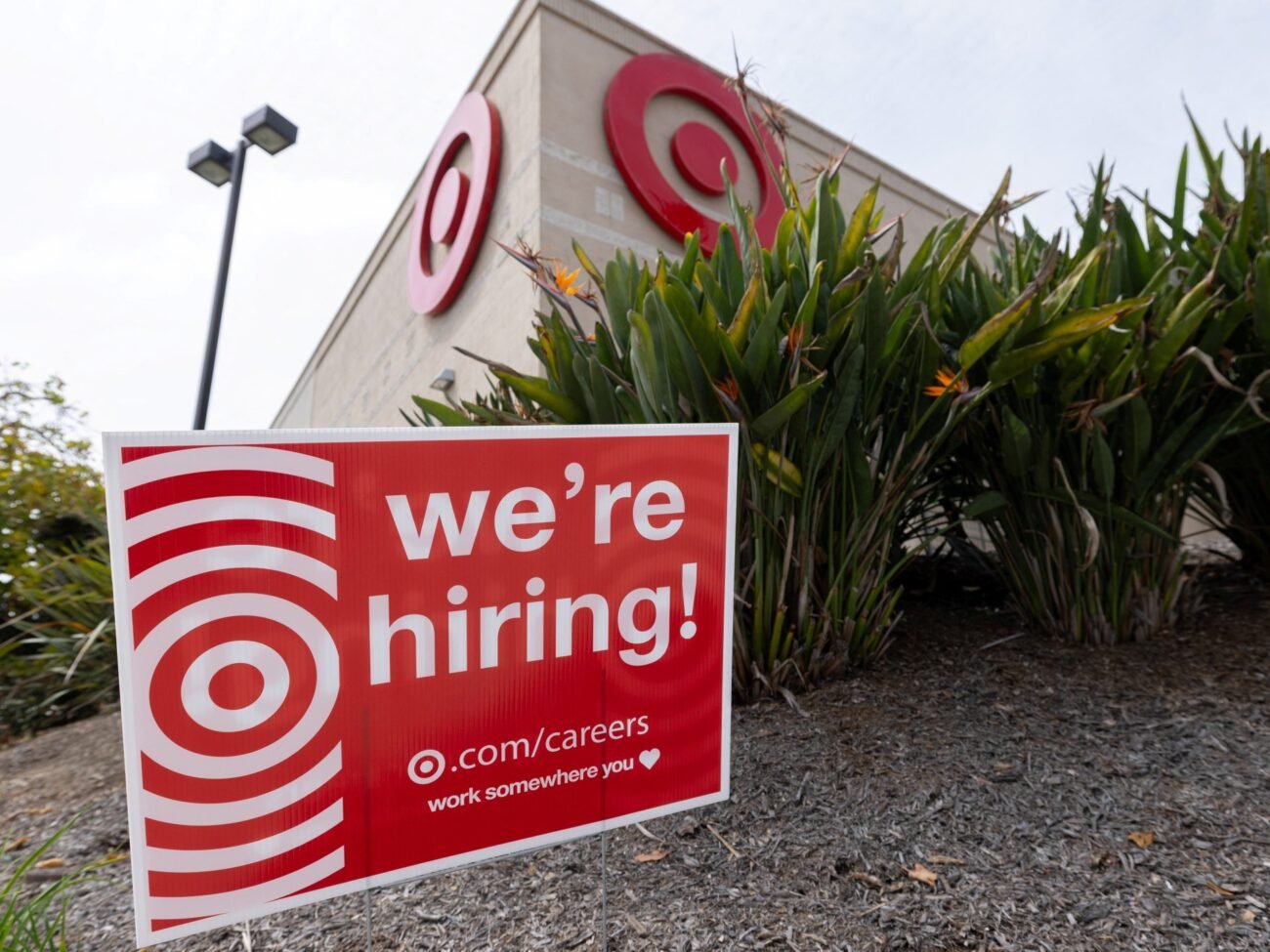
Job openings in the United States have dropped to their lowest level in six years, as the demand for labour stalls amid concerns about trade, immigration and the surging role of artificial intelligence (AI).
Tuesday’s Job Openings and Labour Turnover Survey (JOLTS), a monthly report released by the US Labour Department, showed that job openings tumbled by 358,000 to 6.882 million in February.
Recommended Stories
list of 4 itemsend of listThat was down from a projected 6.918 million job openings for the month, a steeper decline than experts had expected. In January, the JOLTS report had recorded 7.240 million job openings.
Hiring efforts also slumped in February, with 498,000 fewer people hired, for a total of 4.8 million people. That marks the lowest hiring level since March 2020, during the COVID-19 pandemic.
Fewer people are also leaving their jobs for new ones, reflecting stagnation in the job market. Three million people quit last month, for a rate of 1.9 percent.
Alongside the stagnating job market, there has been a broader slump in consumer sentiment.
A March report from the University of Michigan showed that consumer sentiment — a measure of economic confidence — dropped 6 percent from this time last year and 5.8 percent from the previous month.
That put consumer sentiment at its lowest level since December.
Economist Heather Boushey, a professor at the University of Pennsylvania, describes some of that decline as a response to President Donald Trump’s second-term policies.
“People are getting super frustrated with Trump’s economy. Big-ticket items and kitchen-table costs were already on the rise, and this morning, we saw the lowest consumer sentiment of 2026 across nearly every demographic,” Boushey said in a statement provided to Al Jazeera.
Even the reluctance among workers to change jobs could signal a broader sense of malaise with current economic conditions.
The fact that quitting ticked down slightly this month “indicates that workers continue to have a pessimistic view of their chances on the open market,” said Michele Evermore, a senior fellow at the National Academy of Social Insurance.
She added that governments in the US should be planning their policies to address any upcoming fluctuations in the market.
“I’d be remiss not to say that states should seriously be examining their unemployment systems and their readiness to provide an effective countercyclical stabiliser,” Evermore told Al Jazeera.
There are several factors contributing to the economic uncertainty under Trump. Since returning to office for a second term, Trump has implemented wide-reaching tariffs that have faced legal challenges in court.
One of those battles culminated in a Supreme Court ruling barring the use of the International Emergency Economic Powers Act (IEEPA) to implement tariffs. That has left Trump’s tariff regime in flux, as he shifts to other legal mechanisms to levy import taxes.
Then, there was Trump’s decision to join Israel in attacking Iran on February 28. Since that attack, a regional war has erupted in the Middle East, and Iran has retaliated by cutting off trade through the Strait of Hormuz, a vital artery for oil and natural gas.
The blow to the global fossil fuel industry has sent prices skyrocketing. In the US, for example, the American Automobile Association (AAA) has found that the average price for a gallon (3.79 litres) of petrol is $4.018, up more than a dollar from the average of $2.982 a month ago.
“As we head into the fourth week of war with Iran, energy prices are unlikely to bounce back anytime soon, creating the likelihood that the bad mood lingers,” Boushey explained.
Independent experts within the government have also warned about stagnation in the job market.
Earlier this month, Federal Reserve Chair Jerome Powell warned that “zero-employment growth equilibrium” has “a feel of downside risk”.
The Federal Reserve, the US’s central bank, has been under pressure to reduce interest rates under President Donald Trump’s second term.
So far, the bank has opted to keep interest rates steady. It is set to announce its next decision on interest rates in late April.
A Labour Department report from last week underscored that there is less demand among companies for new workers.
It found that payrolls for private, non-farm enterprises had seen their growth slow, averaging 18,000 jobs per month for the three months ending in February.
Trump’s crackdown on immigration has been cited among the reasons for the decline.
Despite the stalling labour market, US markets have been on the upswing in midday trading. The Dow Jones Industrial Average is up by 1.9 percent, the Nasdaq by 3.4 percent and the S&P 500 by 2.3 since the market opened on Tuesday.
Source link
