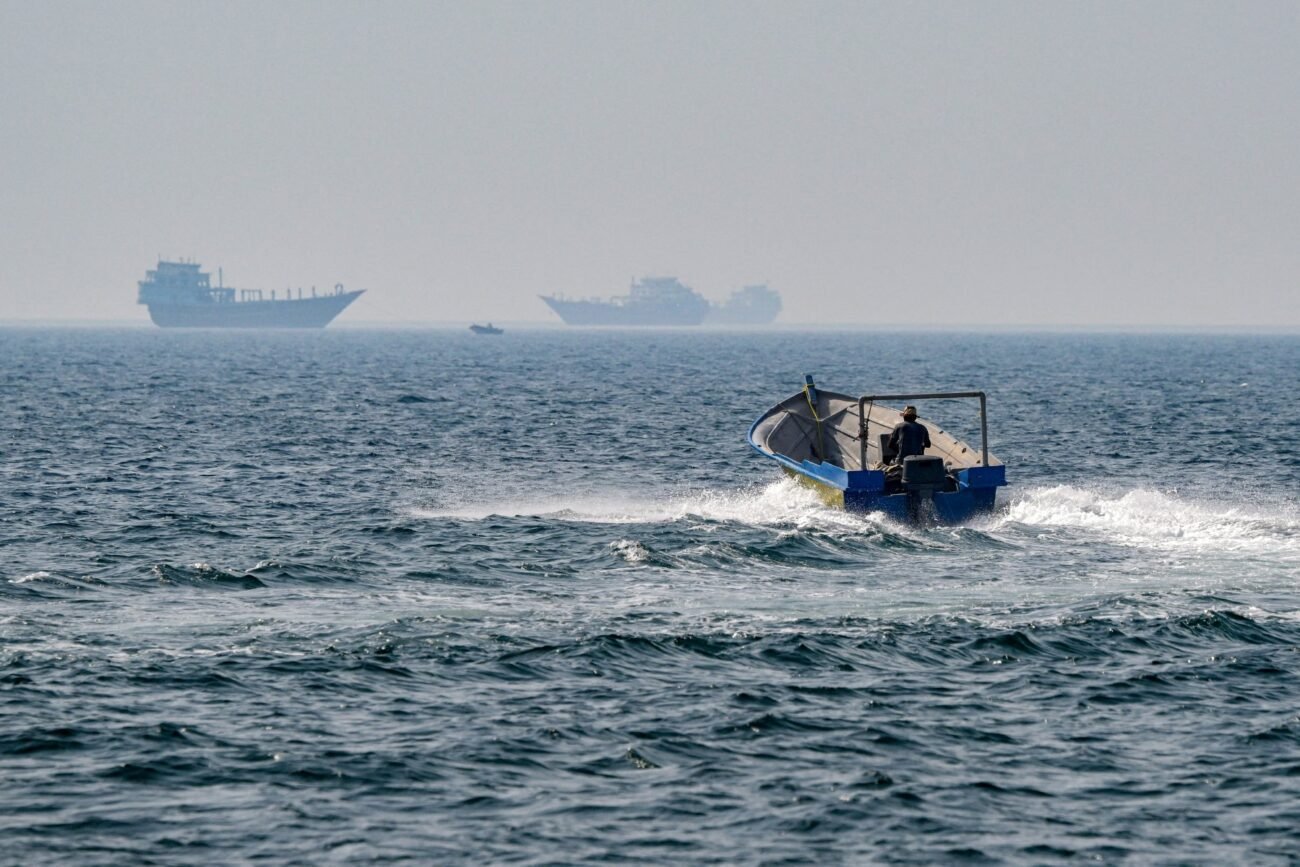
Washington and Tehran accuse each other of not honouring truce agreement.

Published On 10 Apr 2026
Shipping remains at a standstill in the Strait of Hormuz despite the ceasefire agreement between the United States and Iran, dampening hopes for a resolution to one of the worst global energy disruptions in history.
Only a handful of vessels have transited the critical strait since Washington and Tehran on Tuesday announced a two-week pause in fighting, according to ship tracking data.
Recommended Stories
list of 4 itemsend of list
Five vessels crossed the strait on Wednesday, down from 11 the previous day, and seven transited on Thursday, according to data from market intelligence firm Kpler.
More than 600 vessels, including 325 tankers, are still stranded in the Gulf due to the blockage of the strait, according to Lloyd’s List Intelligence.
“While some vessel movement has resumed, traffic remains very limited, compliant shipowners are likely to stay cautious, and safe transit capacity is expected to remain constrained at maximum 10–15 passages a day if the ceasefire holds, without consideration of tolls applied,” Kpler trade risk analyst Ana Subasic said in an analysis on Thursday.
The waterway, which usually carries about one-fifth of global oil and liquefied natural gas (LNG) supplies, typically handled about 120-140 transits before the US and Israel launched their attacks on Iran on February 28.
On Thursday, US President Donald Trump accused Iran of failing to live up to its part of the ceasefire agreement, which includes a commitment to allow “safe passage” through the waterway for two weeks.
“Iran is doing a very poor job, dishonorable some would say, of allowing Oil to go through the Strait of Hormuz,” Trump said in a post on Truth Social.
“That is not the agreement we have!”
Iranian Foreign Minister Abbas Araghchi earlier accused the US of not honouring the deal, warning, in reference to Israel’s ongoing attacks on Lebanon, that it had to choose between a ceasefire or “continued war” via its ally.
“The world sees the massacres in Lebanon,” Araghchi said in a post on social media.
“The ball is in the US court, and the world is watching whether it will act on its commitments.”
After plummeting on the back of the ceasefire announcement, oil prices have begun to tick up as markets digest the reality that maritime traffic remains effectively halted despite the truce.
“This moment requires clarity. So let’s be clear: the Strait of Hormuz is not open,” Sultan Ahmed Al Jaber, the CEO of the United Arab Emirates’ state-run oil company, ADNOC, said in a social media post on Thursday.
“Access is being restricted, conditioned and controlled. Iran has made clear – through both its statements and actions – that passage is subject to permission, conditions and political leverage. That is not freedom of navigation. That is coercion.”
Brent crude, the international benchmark, stood at $96.39 as of 02:00 GMT on Friday, after falling below $95 a barrel on Wednesday.
Asia’s main stock markets opened higher on Friday, following overnight gains on Wall Street driven by hopes of a resolution to the war.
Japan’s benchmark Nikkei 225 was up 1.8 percent in early trading, while South Korea’s KOSPI and Hong Kong’s Hang Seng Index were up about 2 percent and 1 percent, respectively.
